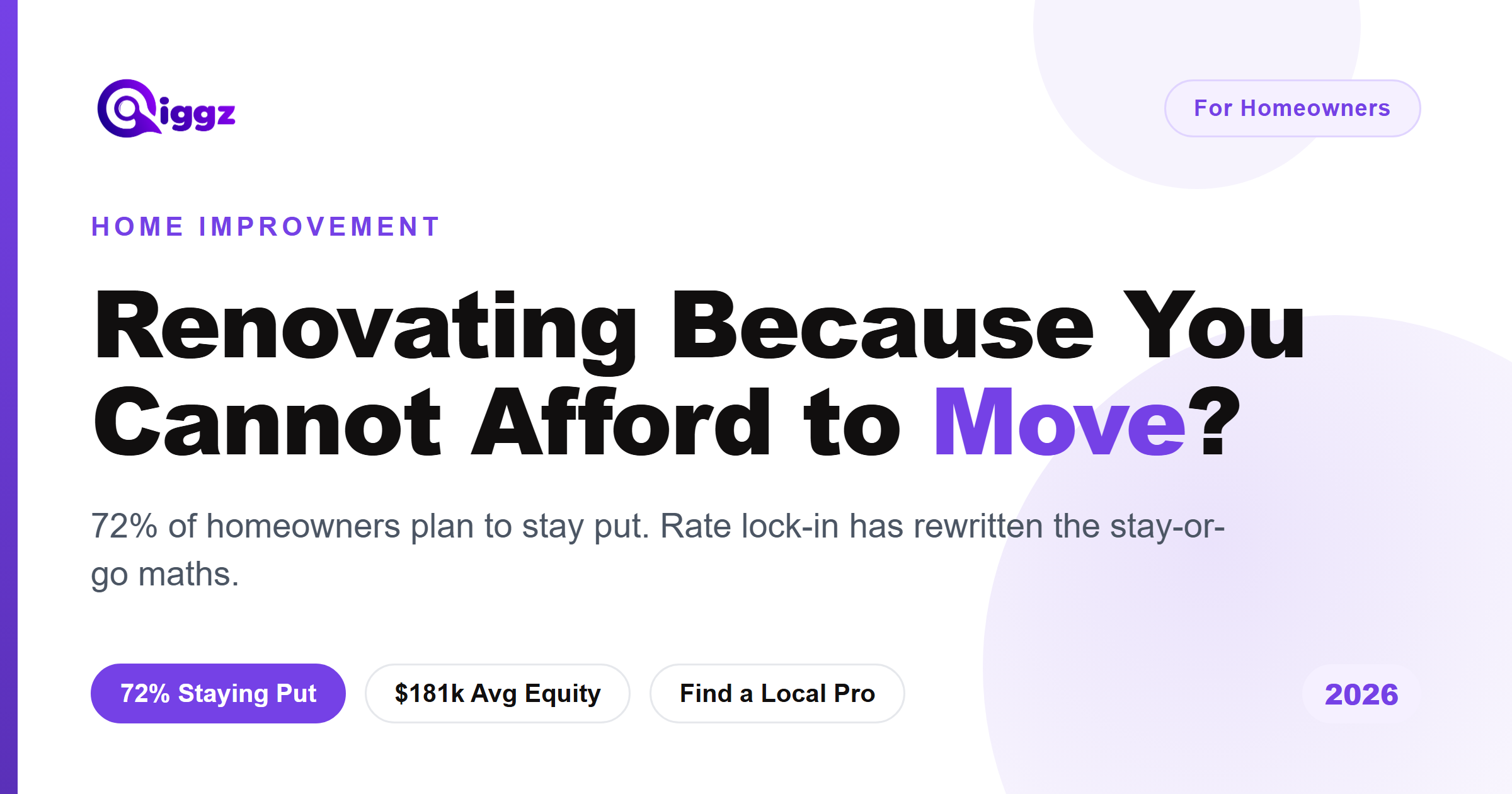
Quick answer: Largely yes. 72% of homeowners report planning to stay put, and the arithmetic explains it. Moving means surrendering a low locked-in rate, paying transaction costs, and buying into tight inventory at today's rates. Renovating uses equity instead, with the typical mortgaged homeowner holding around $181,000 untapped. The constraint isn't money any more. It's finding trades.
For thirty years, outgrowing your house meant selling it. That default broke when rates moved, and it broke quietly.
The arithmetic that changed
A homeowner holding a mortgage well below current rates faces a specific problem. Moving doesn't just cost transaction fees. It permanently resets the cost of their debt for the remaining life of the loan.
Add tight inventory and high transaction costs on both ends, and a renovation that once looked expensive starts looking cheap, because it's being compared against a much larger recurring cost rather than against zero. Roughly 72% of homeowners now say they plan to stay put, with aging housing stock driving repair-focused spending.
Equity made it possible, and someone is selling that
Intent is one thing. Funding is another. What makes staying and renovating workable is that many homeowners are sitting on real equity, with the typical mortgaged homeowner holding around $181,000 untapped. That's what lets a renovation run on a home equity line while the low-rate primary mortgage stays untouched.
Worth being a bit skeptical about how enthusiastically that gets recommended, though. Unlock your equity is advice with a fee attached, and the institutions saying it loudest are the ones originating the loan. A HELOC is still debt secured against your house, at a variable rate, to fund something that may or may not return its cost when you eventually sell.
That's not an argument against it. It's an argument for running the numbers yourself rather than accepting the framing from someone earning on the transaction.
The constraint moved and nobody mentioned it
Here's the part homeowners find out after committing.
The binding constraint has shifted from financing to labor. The trades shortage means renovations now need genuine planning, longer timelines and real diligence about whether a contractor actually has a crew free when they say they do. Supply-side constraints in construction are estimated to cost the wider economy around $2.7 billion annually in delays, and those delays land on your budget as extended timelines and rescheduled work.
Practically: book further ahead than feels necessary, confirm crew availability rather than accepting a start date on trust, and treat a good contractor who's available immediately in a shortage market as a question rather than good luck.
The bigger picture, briefly
Zoom out and there's something slightly uncomfortable in the aggregate. Rate lock-in is freezing transactions, which keeps inventory tight, which keeps prices high, which keeps more people locked in. Meanwhile all that deferred moving demand redirects into renovation, competing for the same short supply of trades and pushing those prices up too.
None of which is any individual homeowner's problem to solve. But it's worth knowing that the reason your contractor is booked out and expensive is partly that a lot of people made the same sensible decision you're making.
Comparing honestly
If you're weighing it, make both sides complete. Against renovation cost, set the price of the new house, the change in monthly payment across the remaining loan, transaction costs both ends, and moving costs.
Against staying, set what a renovation genuinely cannot fix. Location. Lot size. School district. Commute. Those are where moving still wins regardless of the rate, and no amount of equity changes it.
Staying put means finding trades who can actually start
If renovation is the plan, the hard part is lining up reliable local trades in a market where the good ones are booked out.
Qiggz is a free, US-based marketplace for local pros, with reviews from real customers and no lead fee built into your quote. Find local pros, or read our guide to hiring the right contractor before you commit to a start date.
Frequently asked questions
Are people really renovating instead of moving?
The intent data supports it. Around 72% of homeowners report planning to stay put, with rate lock-in, tight inventory and high transaction costs all pushing toward renovating.
Why does rate lock-in matter so much?
Because moving doesn't just cost transaction fees, it resets the interest rate on your debt for the remaining life of the loan. Someone holding a mortgage well below current rates is comparing a one-off renovation cost against a permanently higher monthly payment.
Should I use my home equity to fund a renovation?
It's a common route and often sensible, but run the numbers yourself. A home equity line is debt secured against your house, frequently at a variable rate, and the institutions recommending it most enthusiastically earn fees on it. Check whether the work will return its cost when you eventually sell.
What's the biggest obstacle to renovating now?
Labor, not financing. The trades shortage means longer timelines and real scheduling risk. Construction supply-side constraints are estimated to cost the economy around $2.7 billion annually in delays, which reach homeowners as pushed-back start dates.
When does moving still make more sense?
When the problem is something renovation can't change: location, lot size, school district or commute. Rate lock-in makes staying financially attractive, but it doesn't move your house.
Sources
- 72% of homeowners planning to stay put, with aging homes driving repair-focused spending: Housecall Pro 2026 Home Spending Report, 2026.
- Rate lock-in, tight inventory and high transaction costs pushing homeowners toward renovation, typical untapped home equity around $181,000, and construction supply-side constraints costing an estimated $2.7 billion annually in delays: 2026 housing and renovation market analyses.
- Qiggz no lead fees positioning: first-party (Qiggz product); see /signup.