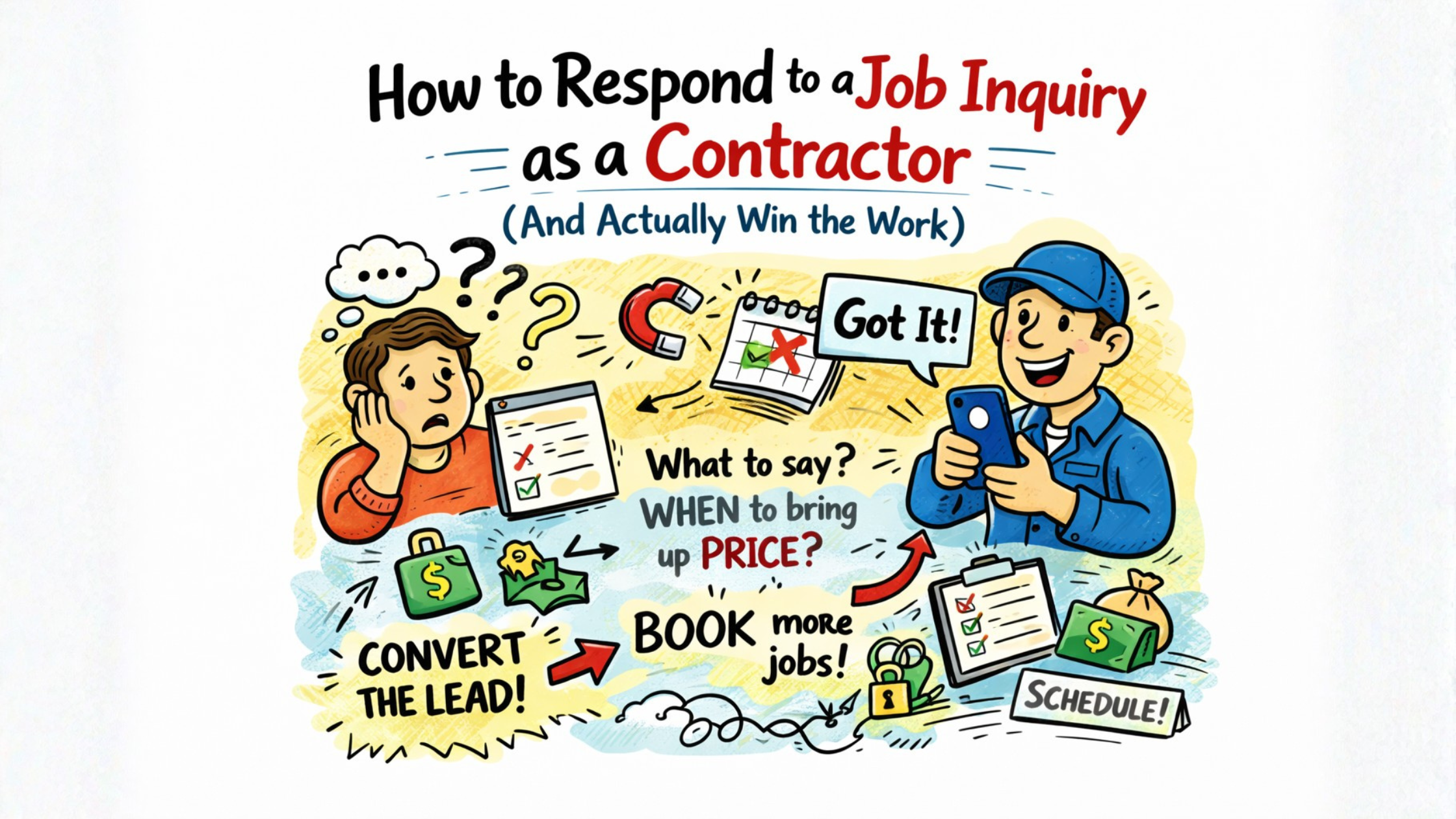
You got the lead. That's the hard part. Or so you thought.
A homeowner saw your profile, liked what they saw, and reached out. You replied. And then… nothing. No follow-up. No booking. Just silence.
It's one of the most common complaints contractors have: "I respond to leads but I'm still losing jobs to other contractors." The frustrating part? It usually has nothing to do with your price, your skills, or your reviews.
"Does Wednesday morning work for a quick look?"
It comes down to what happens in the first few minutes of contact. Most contractors are making the same fixable mistakes.
Why Clients Don't Respond After Getting Your First Message
Speed is the first filter homeowners use, even if they don't realize it. When someone posts a job, they're usually messaging two or three contractors at the same time. The first one to reply with something useful wins the conversation.
Responding six hours later (or the next morning) tells the client one of two things:
• You're hard to reach
• You're not that interested in the job
Neither builds confidence. In most home service situations, the client has a problem they want solved now. Delay signals friction, and friction sends them to the next contractor on the list.
Research from the home services industry consistently shows that the first contractor to respond to a lead after inquiry closes the deal the majority of the time. That window is short. Often less than 30 minutes before the client moves on to the next name on their list.
The fix: Keep notifications on. Aim to reply within 15–30 minutes when a new inquiry comes in. Even a short acknowledgment: "Got your message, I'll follow up in an hour with details" It keeps you in the running and signals that you run a responsive, professional operation.
Why Homeowners Choose Other Contractors (Even When You Reply)
"Hi, I'm John. I have 10 years of experience and offer competitive rates. Let me know if you'd like a quote."
That message gets sent and ignored a hundred times a day. It's generic. It tells the client nothing about their specific job, their situation, or whether you actually read what they posted.
This is why homeowners choose other contractors even when you show up first. A fast but vague reply loses to a slightly slower but specific one every time.
Clients aren't just hiring a skill. They're trusting someone to show up at their home, handle their property, and solve a problem correctly. Generic openers don't create that trust.
The fix: Reference something specific from their job post in your first message. If they mentioned a leaking pipe under the kitchen sink, start there. Specificity signals you're paying attention. That's exactly what clients want from a contractor.
Why Am I Losing Jobs to Other Contractors? It Might Be This
Jumping straight to a number in your first message is one of the fastest ways to lose a client, especially before they've had a chance to trust you.
When trust hasn't been established yet, price becomes the only variable the client has to evaluate. And that's a race to the bottom you don't want to be part of. The contractor who leads with "$350" before earning any credibility will always lose to the one who leads with a smart question.
Think about it from the client's side. They posted a job, got three replies, and one of them opened with a dollar figure. Without any context (no conversation, no questions, no sense of who this person is), that number feels like a gamble. The contractor who spent 20 seconds asking a smart clarifying question now has the upper hand, even if their eventual price is higher.
Price lands differently once a client already feels confident in you. The sequence matters:
• Acknowledge their problem
• Ask one or two smart clarifying questions
• Then discuss pricing in context
The fix: Don't open with a number. Open with a question that shows you understand the scope of the job. "Is the electrical panel accessible from the basement or is it behind drywall?" does more for your close rate than any price quote ever will.
How to Explain a Quote So Clients Actually Say Yes
When you do get to pricing, context is everything. "$450" by itself is just a number. "$450 covers labor, materials, and a same-week start" is a value proposition.
Clients who don't understand what they're paying for will always second-guess the price, and then go find someone cheaper. It's not that they're cheap. It's that they don't have enough information to justify the spend.
This is one of the top reasons homeowners keep searching even after receiving a quote. They didn't feel informed enough to say yes.
The fix: Break down what's included, even briefly. Time, materials, what's covered, what's not. One one-sentence explanation of your quote builds more trust than a detailed resume.
How to Follow Up With a Client Without Being Pushy
A lot of contractors answer the client's question and then just stop. They wait. And the client, who has three other tabs open with three other contractors, moves on.
Every message you send should have a soft next step built in. Not a hard sell. Just a clear invitation to move forward. Think of it as leaving a door open, not pushing them through it.
• "Does Wednesday morning work for a quick look?"
• "Want me to confirm the details so I can get you a firm number?"
• "I can start as early as this week. Want to lock in a time?"
The fix: End every message with a question or a prompt. It keeps you in control of the conversation without being aggressive.
Real Example: Two Contractors, One Job Posting
A homeowner posts a job on Qiggz: bathroom tile repair, cracked grout around the tub, needs done before the weekend.
Contractor A replies four hours later: "I do tile work. My rate is $75/hr. Let me know."
Contractor B replies within 20 minutes: "Saw your post: grout repair around a tub is usually a 2–3 hour job depending on how deep the cracking goes. I'm available Thursday or Friday. Want me to take a look and give you a firm quote same day?"
Contractor B books the job. Not because they were cheaper. Because they were faster, more specific, and gave the client a clear next step. That's the difference.
What Most Contractors Get Wrong About Losing Jobs
Most contractors assume they lost a job because of price. In reality, they often lost it before price was ever discussed.
The client made a decision about you in the first exchange. Tone, speed, specificity, and professionalism all register before a single dollar figure enters the conversation. By the time you're competing on price, you've already lost the trust game.
Here's the blind spot: most contractors blame the platform, the economy, or the client's budget. Rarely do they look at the message they sent and ask, "Would I respond to this?" That one question, asked honestly, can change your close rate faster than any marketing spend.
Fixing your first-message approach won't just improve your conversion rate. It will filter out clients who only care about price and attract clients who actually value the quality of work you bring.
The Short Version: How to Win More Jobs From the First Message
You don't lose clients because of bad work. Most of the time, you lose them before they ever see your work. The first message is your pitch, your first impression, and your conversion opportunity, all in one..
• Reply fast, within 15–30 minutes if possible
• Be specific. Reference their job, not your resume
• Hold off on price. Lead with a smart question first
• Explain your quote. Give context, not just a number
• Always close with a next step. Keep the door open
On a platform like Qiggz, where there are no bidding wars, no commission cuts and you chat directly with the client. The contractor who handles the first message best wins every time.
Start Winning More Jobs on Qiggz
Qiggz is built for contractors who are serious about their work and their income. No bidding wars. No commissions. Direct chat with clients who are ready to hire.
Sign up today and start converting the leads you've already earned.
Handling that first message well matters most when work is thin, so it pays to know how demand shifts through the seasons.
Frequently asked questions
How fast should I respond to a job inquiry?
Within 15 to 30 minutes. Speed is the first filter homeowners use, and a slow reply signals that you are hard to reach or not interested in the work. If you cannot give a full answer that quickly, send a short acknowledgment such as "Got your message, I'll follow up in an hour with details" to hold your place.
Why am I losing jobs to other contractors even when my price is lower?
Because the decision usually happens before price comes up. Clients weigh tone, speed, specificity, and professionalism first, and a contractor who replies fast and asks a smart question can win at a higher number. Lead with a rate before building any trust and price becomes the only thing you are judged on.
What should my first message to a potential client say?
Reference their actual job, not your resume. Generic openers like "Hi, I'm John. I have 10 years experience" get ignored because they show nothing about the client's situation. Acknowledge the problem they described, then ask a clarifying question such as "Is the electrical panel accessible from the basement or behind drywall?"
How should I present a price so the client says yes?
Give the number context instead of dropping it on its own. "$450" means nothing by itself, while "$450 covers labor, materials, and same-week start" tells the client what they are getting. Break out the inclusions, the time involved, materials, what the coverage extends to, and what it excludes.
How do I follow up with a client without sounding pushy?
End every message with a soft next step, so the client has something easy to answer. Lines like "Does Wednesday morning work for a quick look?", "Want me to confirm details for a firm number?", or "I can start this week. Want to lock in a time?" move things forward without pressure.