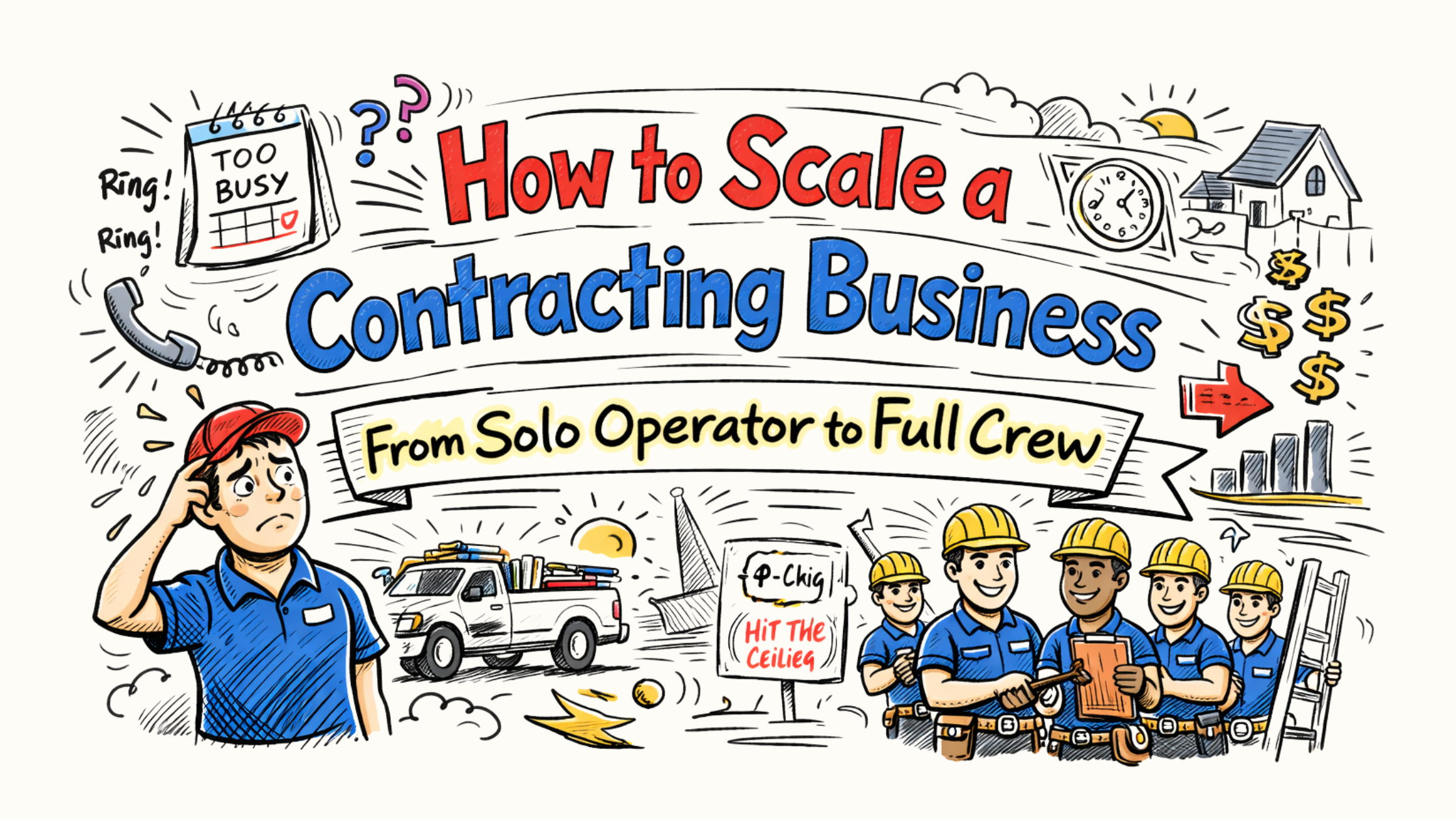
Jake's a roofer in central Texas. Five-star reviews. A phone that won't stop buzzing. And last month, he turned down $38,000 worth of work because he physically couldn't take it on. He's one guy with one truck, and there are only so many hours between sunrise and dark.
If that sounds like you, booked solid but capped out, you've hit the ceiling every successful solo contractor eventually hits. The question isn't whether you should scale. It's whether you're ready, and whether you'll do it smart.
Know When It's Time to Stop Being a One-Man Show
Certain signals make it clear that it's time to grow beyond working solo.
- You're turning down good work. If you said no to $30K or more last quarter because you didn't have the bandwidth, that's real revenue walking out the door.
- You're working 60 hour weeks and still behind. Burnout creeps in through missed calls, sloppy measurements, and shorter fuses with clients.
- Your revenue has flatlined. You raised prices and tightened your schedule but the number barely moved because one person can only produce so much.
Jake was clearing around $180K a year but couldn't push past it. Something had to change.
Your First Hire: Employee or Subcontractor?
Subcontractors carry their own insurance, supply their own tools, and handle their own taxes. You bring them in when needed and part ways when the job's done. If your workload swings seasonally, subs give you flexibility without year-round payroll overhead.
Employees give you control and consistency. They learn your standards. The trade-off is payroll taxes, workers' compensation, and responsibility for keeping them busy.
Jake's move was a part-time laborer three days a week from a local trade program. That one hire let him take on two more jobs per month without working any harder.
Build Systems Before You Build a Team
Most contractors hire first and then scramble to manage someone. Flip that. Before your first hire shows up, document the basics:
- Pricing standards: your rates, markups, and how you estimate jobs. Written down, not just in your head.
- Job checklists: step-by-step instructions for each type of work. What does done actually look like?
- Client communication templates: how you send quotes, confirm schedules, and follow up after completion.
Jake spent two weekends documenting his processes. When his helper started, there was no guessing. The kid knew exactly what done right meant because it was clearly spelled out.
How to Find Reliable Help
The best hires in the trades still come through referrals. Ask other contractors, suppliers, and past clients if they know someone looking for work. Also connect with local trade schools and apprenticeship programs, many of which actively connect graduates with contractors.
Jake found his first hire through a buddy's one text: 'Know anyone who wants to work and actually shows up?' That's still one of the most effective recruiting tools in the trades.
Don't Scale Faster Than Your Pipeline Can Support
Growth feels exciting until you've got two guys on payroll and three weeks of dead air on the schedule. Add one person at a time. Make sure the revenue covers their cost, plus a margin, before thinking about the next hire.
Jake waited three months after his first hire, confirmed his pipeline was steady, then added another laborer. He never missed a payroll. He went from $180K solo to over $300K with a two man crew and is home by 6 most nights.
Keep Your Crew Busy With a Steady Pipeline
Scaling only works if you have enough jobs coming in. Qiggz is built for contractors who want a reliable flow of work without the headaches. No bidding wars. No commissions. You keep 100% of what you earn.
The Profile Visibility Score rewards quality and consistency, pushing your profile higher so more clients can find you.
Frequently asked questions
How do I know when it is time to hire my first employee?
Three signals say you have hit your ceiling: turning down serious money for lack of bandwidth, working 60-hour weeks and still falling behind, and revenue flattening even after you raise prices. The roofer in the post turned down $38,000 of work in a single month while clearing around $180K a year solo.
Should I hire employees or use subcontractors?
It depends on whether you need flexibility or control. Subcontractors carry their own insurance and tools and flex with the season, which suits uneven workloads. Employees cost more through payroll taxes and worker's compensation, but they give you control and consistency, which matters when quality is what your reputation rests on.
What systems should I have in place before my first hire?
Document three things first: your pricing standards and how you estimate, step-by-step job checklists that define what quality means, and your client communication templates. Without them you are not hiring help, you are hiring someone to guess. Systems are what let a new person do the work your way.
Where do I find good tradespeople to hire?
Referrals still produce the best hires in the trades. Ask other contractors, your suppliers, and your clients who they rate and would use again. Local trade schools and apprenticeship programs are the other reliable source, particularly if you are willing to train someone into your systems rather than buy finished experience.
How fast should I grow my crew?
Add one person at a time, and confirm the pipeline can sustain them before adding another. The roofer in the post waited three months between hires and went from $180K solo to over $300K with a two man crew, while getting home by 6 most nights. Pace is what keeps growth from breaking quality.