Ricky is a licensed electrician out of Tampa with 11 years under his belt. Last spring, he got a call from a homeowner who needed just a quick panel upgrade. The scope changed three times before Ricky pulled a permit. The homeowner trash-talked the last two electricians. He pushed back on the deposit. Three weeks later, after chasing approvals and absorbing extra material costs, the client disputed the final invoice.
Ricky didn't have a bad-client problem. He had a screening problem. Every red flag was there at the start. He just didn't want to see them.
Why Saying Yes to Every Job Will Cost You
When you're building a business, it's tempting to take every call. But saying yes to the wrong client doesn't just waste your time on one bad job, it bleeds into everything else. You show up stressed to your next project. You burn hours on disputes instead of booking better work.
Every slot you fill with a problem client is a slot you can't give to someone who respects your work, pays on time, and sends referrals. That Tampa job cost Ricky roughly $2,800 in unbilled hours. He could have booked two clean jobs in the same window.
The Red Flags You Should Never Ignore
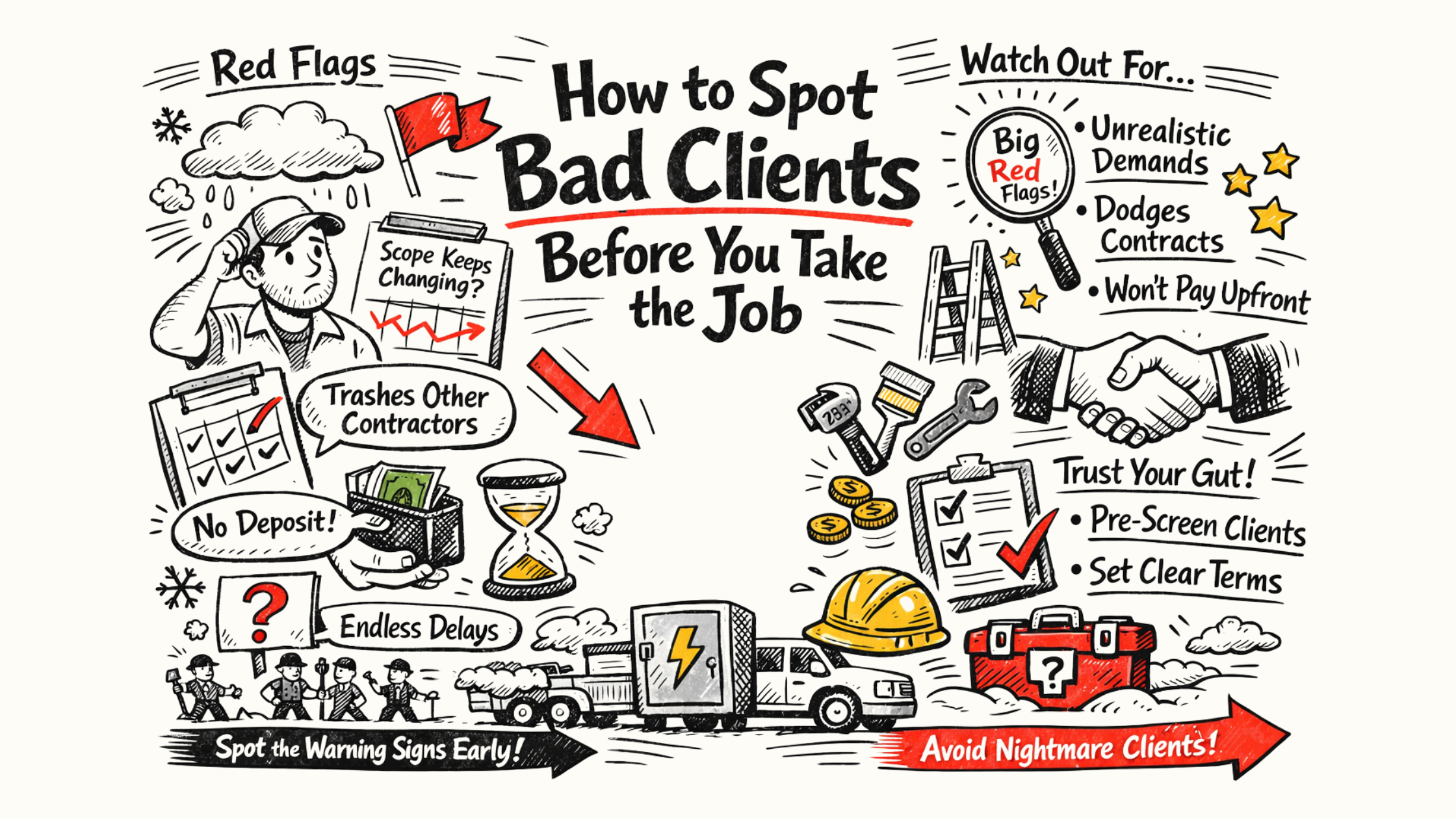
- They trash-talk every contractor they've ever hired. If the last three guys were all incompetent, the common denominator isn't the contractors.
- They haggle hard before you've even started. Grinding on price before seeing your scope tells you exactly what they value.
- The scope is vague. If a client can't clearly describe what they want, the finish line will keep moving.
- They say 'it should be easy' or 'it shouldn't take long.' This signals someone who will push back on your price later.
- They resist putting anything in writing. No contract? Walk. No exceptions.
- They push back on a deposit. If they're fighting you on money before the job starts, that's a preview of how the final invoice will go.
The Contract Is Your Shield, Not Bureaucracy
A clear written scope is the single best tool you have for avoiding disputes. Your contract should include at minimum:
- A detailed description of the work
- Materials and who supplies them
- Total cost and payment schedule
- Start and estimated completion dates
- A change order process
- Cancellation terms
If Ricky had a tighter change order clause, he'd have been paid for every extra hour. The changes happened verbally, nothing was documented, and the homeowner used that ambiguity to dispute the bill. Write it down. Get it signed. Every time.
How to Screen Clients Before You Commit
- Ask why the last contractor didn't work out. The answer tells you everything.
- Ask them to describe the scope in their own words. If they can't, the project isn't ready.
- State your payment terms early, before you've invested time in an estimate.
- Set communication expectations upfront such as working hours, preferred contact method, and response time.
- Trust your gut. Your instinct has logged every bad job you've ever taken. Listen to it.
Walking Away Is a Business Decision, Not a Personal One
Turning down work feels wrong when you've built your career on showing up. But walking away from a bad fit isn't weakness. It's strategy. A simple 'I don't think I'm the right fit for this project' is enough. You're protecting your time, your crew's morale, and your reputation.
Ricky turns down about one in ten calls now. Not because he's too good for the work, but because he's too smart to repeat the mistake. He's busier, more profitable, and a lot less stressed.
Build a Better Filter for Finding the Right Clients
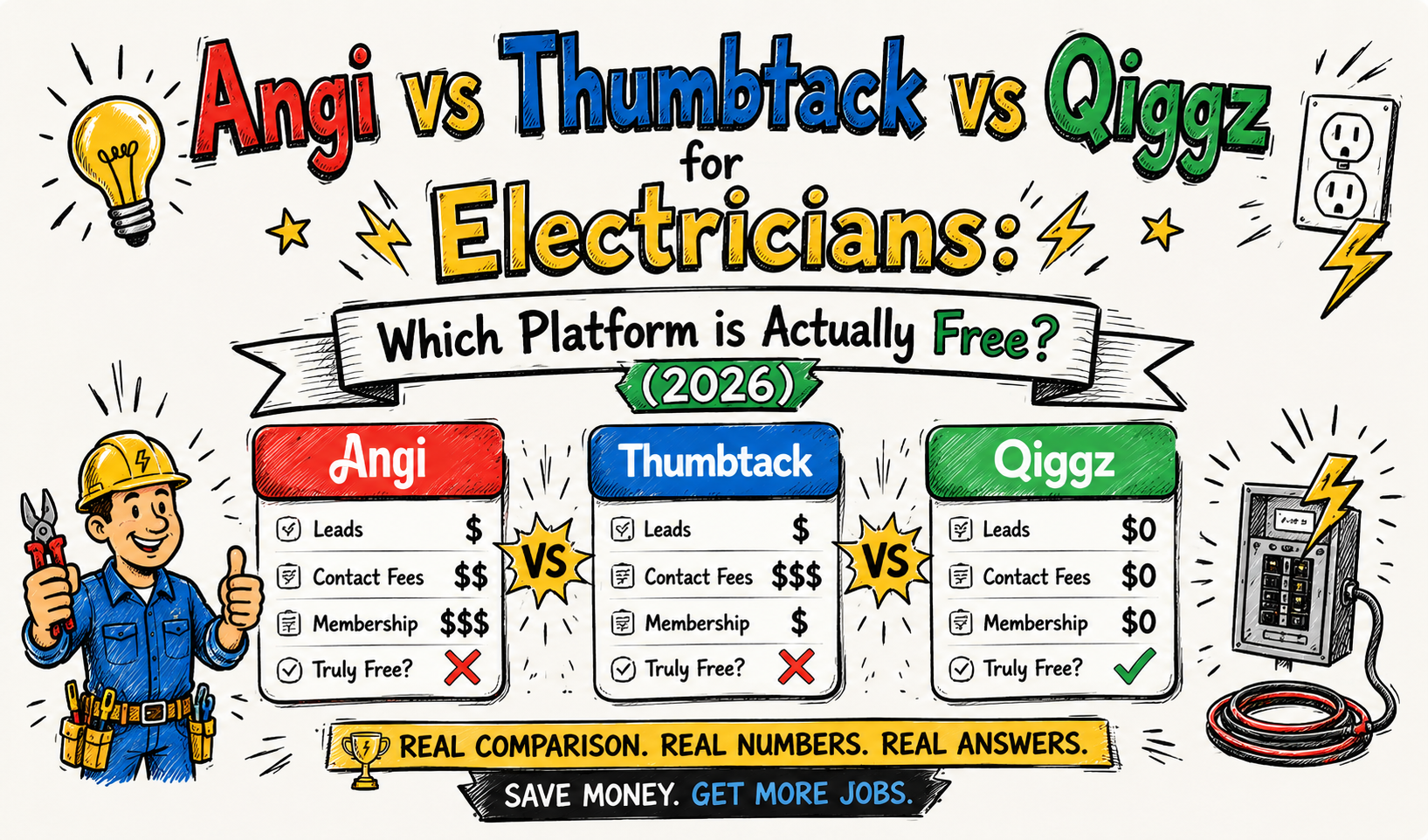
Part of client quality comes down to where you find them. Bidding-war platforms attract price-shoppers, the exact clients most likely to grind you down and undervalue your work.
Qiggz is built differently. Homeowners describe their job upfront so you can review the scope before you ever reach out. No bidding wars, no commissions, and direct chat so you can ask screening questions and get a feel for the client before committing to anything.
Your time and reputation are the two assets you can never get back. Protect them like your business depends on it, because it does.
Frequently asked questions
What are the warning signs of a bad client?
Six recur. They criticize every contractor they have used before, they push hard on price before the scope exists, they describe the project vaguely, they say "it should be easy," they resist putting anything in writing, and they push back on a deposit. One is a caution. Several together is an answer.
What does it mean when a client badmouths every previous contractor?
It usually means the client is the constant. If every contractor before you was incompetent, dishonest, or slow, the pattern points at the person describing it rather than at the trades. Expect to become the next name on that list as soon as something on the job does not go their way.
Why does a client resisting a deposit matter so much?
Because it previews the final invoice. A client who fights a deposit is telling you how the payment conversation goes once the work is done and your leverage is gone. The Tampa electrician in the post took a panel upgrade from exactly that client, then had the invoice disputed, costing him around $2,800 in unbilled hours.
What should a contract include to protect me?
A detailed description of the work, the materials specified and who supplies them, the total cost and payment schedule, start and completion timelines, a change order procedure, and cancellation terms. The change order clause earns its keep, because it turns "while you're here" into a priced decision instead of free labor.
What should I ask a client before agreeing to the job?
Ask why their previous contractors did not work out and listen closely to how they answer. Have them describe the scope in their own words to see whether it is actually defined. State your payment terms early, set communication expectations up front, and trust your instincts when the answers feel off.