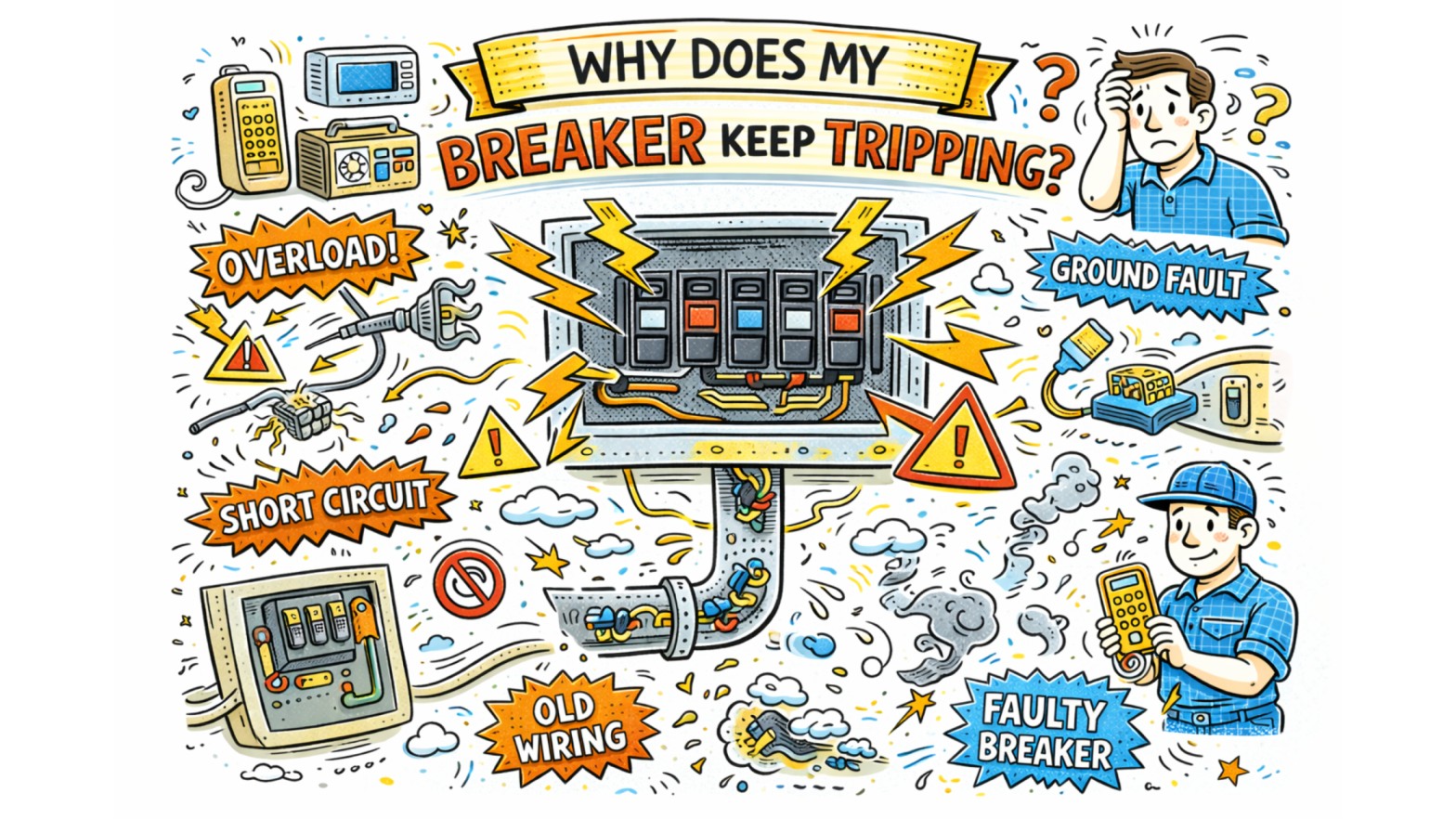
Introduction: A Tripping Breaker Is Doing Its Job
When a breaker trips, it's easy to get annoyed. You flip the switch back on. It works for a while. Then, click, it trips again. It feels like a nuisance, but here's the important thing to understand:
A breaker that keeps tripping is protecting your home. It's telling you something isn't right. Sometimes the issue is simple. Other times, it's a sign of a serious electrical problem that shouldn't be ignored.
This guide explains why breakers trip, what you can safely check yourself, and when it's time to call a professional before the problem becomes dangerous.
1. What a Circuit Breaker Is Actually Doing
Your circuit breaker is a safety device. Its job is to:
- Stop electricity when a circuit is overloaded
- Shut off power if there's a short or fault
- Prevent overheating and electrical fires
When a breaker trips, it's reacting to unsafe conditions, not malfunctioning out of spite. Repeated trips mean the breaker is detecting a problem again and again.
hr>
2. The Most Common Cause: Circuit Overload
The number one reason breakers trip is overload. This happens when:
- Too many devices are running on one circuit
- Appliances draw more power than the circuit can handle
Common overload scenarios include:
- Space heaters
- Microwaves
- Hair dryers
- Window AC units
- Multiple high-draw devices on the same outlet
If the breaker trips when you turn something on, overload is the likely cause.
hr>
3. Why Older Homes Trip Breakers More Often
In many US homes, especially older ones, electrical systems weren't designed for modern usage. Older homes may have:
- Fewer circuits
- Lower amperage panels
- Wiring designed for basic appliances
Modern homes, on the other hand, run:
- Multiple electronics
- Smart devices
- High-efficiency appliances
- Charging stations
This mismatch often causes frequent breaker trips, even if nothing seems "wrong."
hr>
4. Short Circuits: A More Serious Issue
A short circuit happens when:
- A hot wire touches a neutral wire
- A hot wire touches ground
This causes a sudden surge of electricity, which forces the breaker to trip immediately. Signs of a possible short circuit include:
- Breaker trips instantly when reset
- Burning smells
- Scorch marks near outlets
- Popping sounds
Short circuits are dangerous and should not be ignored or repeatedly reset.
hr>
5. Ground Faults (Especially in Kitchens & Bathrooms)
Ground faults are common in:
- Kitchens
- Bathrooms
- Laundry rooms
- Outdoor outlets
They happen when electricity escapes the intended path, often due to moisture. GFCI outlets and breakers are designed to trip quickly in these situations to prevent electric shock.
If your breaker trips when using appliances near water, a ground fault may be the cause.
hr>
6. Faulty Appliances Can Trip Breakers
Sometimes the problem isn't your wiring, it's the appliance. Appliances with internal faults can:
- Draw too much power
- Cause short circuits
- Trigger breaker trips repeatedly
A simple test:
- Unplug everything on the circuit
- Reset the breaker
- Plug devices back in one at a time
If the breaker trips when a specific appliance is used, that appliance may need repair or replacement.
hr>
7. Loose Wiring and Aging Connections
Loose or damaged wiring creates resistance. Resistance leads to:
- Heat buildup
- Voltage irregularities
- Breaker trips
This is more common in:
- Older homes
- Homes with DIY electrical work
- Homes with recent renovations
Loose wiring is not visible without inspection, but it's a common cause of recurring breaker issues.
hr>
8. When the Breaker Itself Is the Problem
Breakers don't last forever. Over time, they can:
- Wear out
- Become overly sensitive
- Fail to reset properly
If a breaker trips with no load or won't stay on at all, it may be faulty. Replacing a breaker is not a DIY task unless you're properly trained, it involves working inside the electrical panel.
hr>
9. Why You Shouldn't Keep Resetting a Tripping Breaker
Repeatedly flipping a breaker back on without fixing the issue is risky. Each trip indicates:
- Excess heat
- Electrical stress
- Potential fire risk
If a breaker trips:
- Once: monitor it
- Repeatedly: investigate it
- Immediately: stop using that circuit
A breaker that trips often is asking for attention.
hr>
10. Safe Checks Homeowners Can Do
There are a few safe steps homeowners can take. You can:
- Unplug devices on the affected circuit
- Reduce load (turn off heaters or appliances)
- Note when the breaker trips (specific appliance or time)
- Check for obvious damage on outlets or cords
You should not:
- Open the electrical panel beyond resetting breakers
- Replace breakers yourself
- Ignore burning smells or sparks
If the cause isn't obvious, it's time to call a professional.
hr>
11. When a Tripping Breaker Becomes an Emergency
Call an electrician immediately if you notice:
- Burning smells
- Sparks or buzzing
- Breakers that won't reset
- Warm outlets or panels
- Flickering lights with breaker trips
These signs point to serious electrical hazards.
hr>
12. How Electricians Diagnose Breaker Problems
A professional electrician can:
- Measure circuit load
- Inspect wiring connections
- Identify faulty appliances
- Check panel capacity
- Recommend circuit upgrades
Often, the solution isn't just "fixing" the breaker, it's correcting what's stressing the system.
hr>
13. Preventing Breaker Trips Long-Term
Prevention often involves:
- Redistributing electrical loads
- Adding dedicated circuits
- Upgrading panels in older homes
- Replacing aging wiring
Modern electrical demands require modern solutions.
hr>
14. Choosing the Right Help
If breaker trips are recurring, guessing can get expensive, and dangerous. Many homeowners now prefer using platforms like Qiggz, where you can connect directly with qualified local electricians, review profiles, and choose who you want to work with, without pressure or middlemen.
The right professional can identify the cause quickly and safely.
hr>
The Bottom Line
If you're asking, "Why does my breaker keep tripping?", your home is giving you an important signal. Sometimes it's a simple overload. Other times it's a deeper electrical issue.
Ignoring repeated trips or constantly resetting breakers increases risk, not convenience. Addressing the problem early protects:
- Your home
- Your appliances
- Your safety
Frequently asked questions
Why does my circuit breaker keep tripping?
The most common cause is circuit overload, meaning too many devices are drawing power on one circuit. Other causes include short circuits, ground faults, a faulty appliance, loose wiring, or a breaker that has worn out. A breaker that keeps tripping is protecting your home and telling you something isn't right.
How do I find out which appliance is tripping my breaker?
Unplug everything on the affected circuit, reset the breaker, then plug devices back in one at a time until it trips. The device that trips it is your likely culprit. High draw items like space heaters, microwaves, hair dryers, and window AC units are frequent causes, especially when several run at once.
Is it safe to keep resetting a breaker that trips?
No. Repeatedly resetting a breaker without fixing the cause is hazardous, because each trip signals excess heat, electrical stress, and potential fire risk. Use this guide: if it trips once, monitor it. If it trips repeatedly, investigate it. If it trips immediately on reset, stop using that circuit and call a licensed electrician.
When does a tripping breaker become an emergency?
Call a licensed electrician immediately if you notice burning smells, sparks or buzzing, a breaker that won't reset, warm outlets or panels, or flickering lights alongside the trips. These point to serious electrical hazards. Do not open the electrical panel yourself and do not replace a breaker on your own.
Why do older homes trip breakers more often?
Older homes were wired for far lower electrical demand, so they often have fewer circuits, lower amperage panels, and wiring meant for basic appliances. Modern households run many more devices, smart technology, and charging stations. Long term fixes include redistributing loads, adding dedicated circuits, upgrading the panel, or replacing aging wiring, all of which require a licensed electrician.