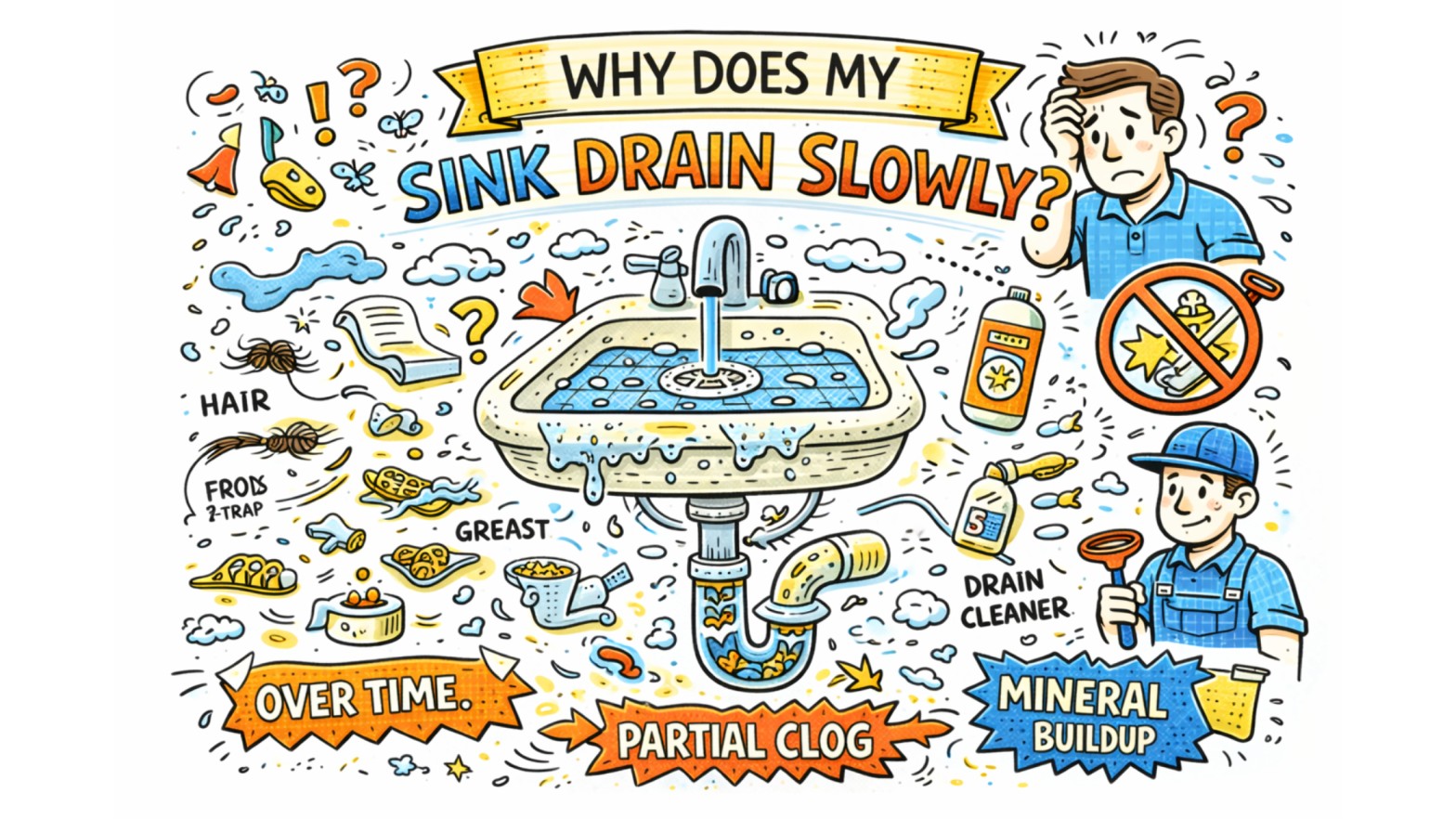
Introduction: A Slow Drain Is a Warning, Not Just an Annoyance
At first, it’s barely noticeable. The water takes a few extra seconds to go down. You shrug it off. “It’ll clear on its own.”
But over time:
- Water starts pooling
- Odors show up
- The sink becomes frustrating to use
A slow draining sink is one of the most common early signs of plumbing trouble in US homes, and one of the most ignored.
The good news?
Many slow drains start small and are fixable.
The bad news?
When ignored, they often turn into full clogs, backups, or pipe damage.
Let’s break down why your sink drains slowly, what you can safely try yourself, and when it’s time to bring in a professional.
1. The Most Common Cause: Buildup Over Time
In most homes, slow drains aren’t caused by a single blockage. They’re caused by gradual buildup.
In bathroom sinks, that buildup is usually:
- Hair
- Soap residue
- Toothpaste
- Skin oils
In kitchen sinks, it’s often:
- Grease and oils
- Food particles
- Coffee grounds
- Starchy residue
Over weeks or months, this material coats the inside of the pipe, narrowing the space water has to flow through. The result: Water still drains, but much more slowly.
2. Partial Clogs (The Kind That Sneak Up on You)
A full clog is obvious.
A partial clog is deceptive.
With a partial clog:
- Water drains slowly, not completely blocked
- The problem seems to come and go
- You may notice bubbling or gurgling
Partial clogs are dangerous because they create pressure in your plumbing system. That pressure can:
- Push debris deeper into the pipe
- Stress pipe joints
- Lead to sudden, complete blockages
This is why slow drains should be addressed early, not ignored.
3. The P-Trap: A Common Trouble Spot
Under your sink is a curved pipe called the P-trap. Its job is to:
- Hold water to block sewer gases
- Catch debris before it goes deeper into the system
Over time, the P-trap can fill with:
- Hair
- Sludge
- Food residue
Because it’s a bend, debris tends to settle there first. The good news: P-traps are often accessible and sometimes fixable without major work.
4. Grease: The Silent Drain Killer
Grease is one of the biggest culprits behind slow kitchen sinks. Even when hot grease looks liquid, it:
- Cools inside pipes
- Hardens on pipe walls
- Traps food and debris
Over time, grease creates a sticky layer that slowly strangles your drain. This is why:
- “Just a little grease” still causes problems
- Chemical drain cleaners rarely solve grease buildup long-term
- Grease-related slow drains almost always get worse if not handled properly
5. Hard Water and Mineral Buildup
In many parts of the US, hard water contributes to slow drains. Minerals like calcium and magnesium:
- Build up on pipe walls
- Reduce pipe diameter over time
- Combine with soap and debris
Homes with hard water often experience repeated slow drains, shorter pipe lifespan, and more frequent plumbing maintenance needs.
6. When the Problem Isn’t Your Sink at All
Sometimes, the slow drain isn’t in the sink line, it’s deeper. Signs of a bigger issue include:
- Multiple sinks draining slowly
- Gurgling sounds from nearby drains
- Water backing up in another fixture
This can indicate a clogged main drain, venting issues, or deeper pipe obstructions. At this point, DIY fixes usually won’t solve the problem and may make it worse.
7. DIY Fixes You Can Try (Safely)
If your sink is draining slowly but not completely blocked, a few safe steps may help. Safe first steps:
- Remove and clean the sink stopper
- Use a plunger (yes, even for sinks)
- Flush with hot water (not boiling)
- Clean the P-trap if accessible
What to be careful with:
- Avoid mixing chemical cleaners
- Don’t use chemicals repeatedly
- Don’t force tools deep into pipes
If the drain improves briefly but slows again, the clog is likely deeper, and recurring.
8. Why Chemical Drain Cleaners Often Backfire
Drain cleaners promise quick fixes, but they come with risks:
- Damage older pipes
- Soften PVC joints
- Fail to remove grease buildup
- Create dangerous reactions if mixed
Many plumbers see chemical cleaners turn small clogs into bigger repairs. They may clear a hole, but leave most of the buildup behind.
9. When a Slow Drain Becomes an Emergency
A slow drain becomes urgent if you notice:
- Sewage smells
- Water backing up into another sink
- Standing water that won’t go down
- Repeated clogs in a short time
These are signs of deeper blockages, venting issues, and potential pipe damage. At this stage, delaying repairs often increases cost and damage.
10. Why Professional Help Is Sometimes the Smarter Choice
A professional plumber doesn’t just clear the drain, they:
- Identify the real cause
- Remove buildup safely
- Protect your pipes
- Prevent repeat issues
Modern tools like camera inspections and professional drain cleaning address the entire pipe, not just the symptom. If you’re dealing with recurring slow drains, professional help often saves money long-term.
11. How to Prevent Slow Drains in the Future
Prevention is simple, but consistency matters. Good habits include:
- Avoid pouring grease down the sink
- Use drain strainers
- Flush drains regularly with hot water
- Address slow drainage early
- Schedule preventive maintenance if issues repeat
Small habits make a big difference over time.
12. Don’t Ignore the Early Signs
A slow drain is your plumbing system asking for attention. Ignoring it can lead to:
- Full blockages
- Water damage
- Costly repairs
- Emergency calls
The Bottom Line
If you’re asking, “Why does my sink drain slowly?”, you’re asking the right question. Most slow drains start small. Most get worse if ignored. Many are preventable. If basic fixes don’t solve the issue, it’s a sign the problem runs deeper.
When in doubt, it’s best to have a qualified professional take a look. Many homeowners now prefer using platforms like Qiggz, where you can connect directly with verified local plumbers, compare profiles, and choose who you want to work with, without middlemen or pressure.
Frequently asked questions
Why is my sink draining slowly?
Slow drainage is usually caused by gradual buildup narrowing the pipe. In bathrooms that means hair, soap residue, toothpaste, and skin oils. In kitchens it is grease, oils, food particles, coffee grounds, and starchy residue. Hard water minerals and debris caught in the P trap also restrict flow. A slow drain is an early warning, not a cosmetic issue.
What can I safely try myself on a slow draining sink?
Remove and clean the sink stopper, try a plunger, flush with hot but not boiling water, and clean the P trap under the sink if you can reach it. Avoid mixing chemical cleaners, using them repeatedly, or forcing tools deep into pipes. If drainage improves briefly then slows again, the clog is deeper in the system.
Are chemical drain cleaners bad for my pipes?
They often make things worse. Chemical cleaners can damage older pipes, soften PVC joints, and fail to remove grease, and mixing them creates dangerous reactions. Plumbers regularly see them turn small clogs into bigger repairs, because they clear a narrow hole through the blockage while leaving most of the buildup in place.
When should I call a plumber about a slow drain?
Call promptly if you notice sewage odors, water backing up into other sinks, standing water that won't drain, or clogs returning within a short time. Multiple slow drains or gurgling from several fixtures suggest a main drain clog or a venting problem rather than a local blockage. Licensed plumbers use camera inspections to find the real cause.
How do I stop my drains from clogging again?
Never pour grease down the drain, install strainers to catch hair and food, flush regularly with hot water, and deal with slow drainage as soon as you notice it. If clogs keep coming back, schedule preventive maintenance instead of repeating the same fix. Consistent habits matter more than any single treatment.