Introduction: Water Isn't the Problem—It's the Assumption
If your lawn looks dead or patchy, your first instinct is probably to water it more. Sprinklers on longer. More frequent watering. Different times of day.
And yet… the grass keeps dying.
Here's the hard truth most homeowners don't hear:
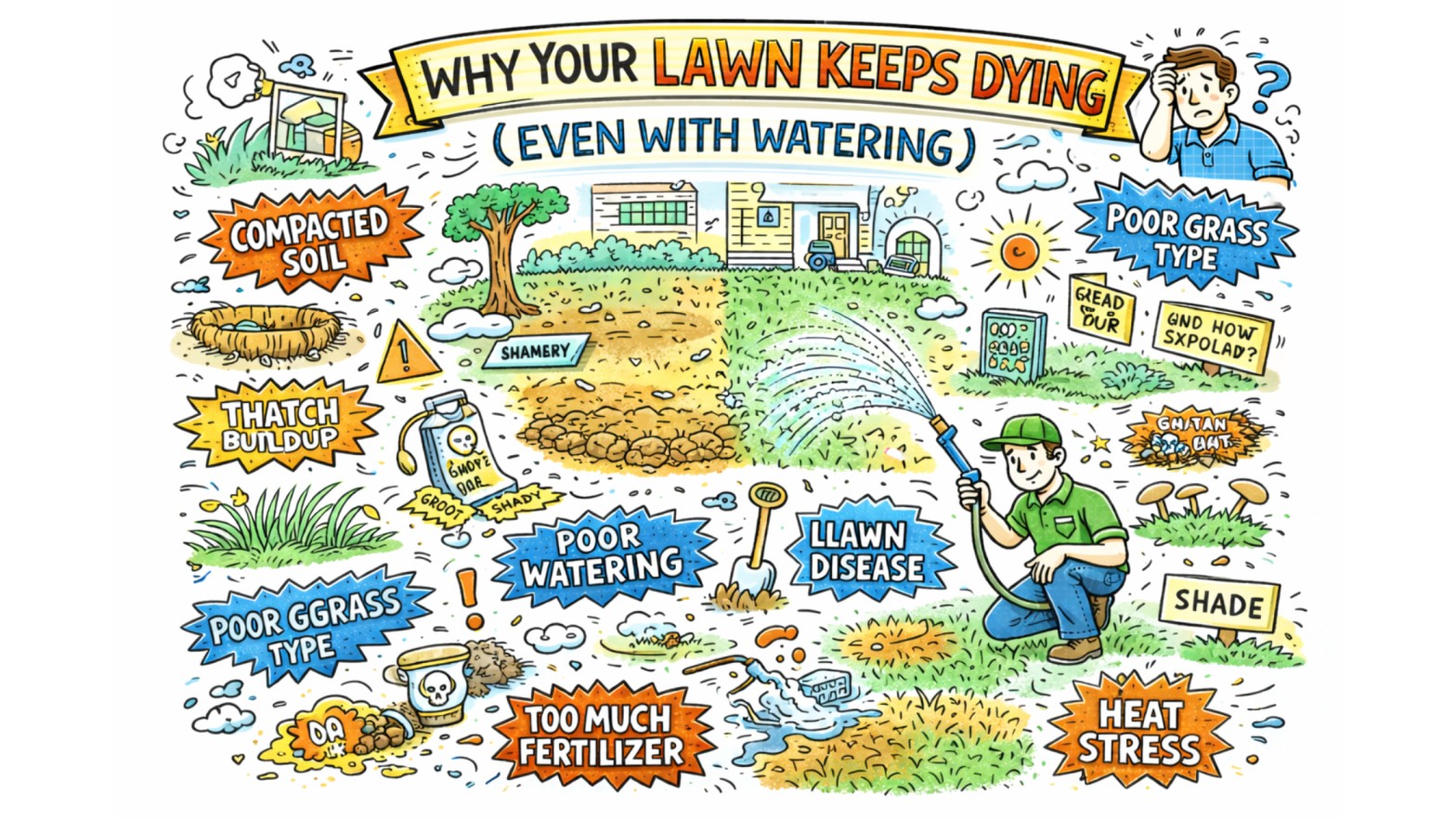
Most lawns don't die from lack of water. They die from hidden problems water can't fix.
This guide breaks down the real reasons lawns fail—even when they're being watered regularly—and what you can do to stop wasting time, money, and effort.
1. You're Watering Too Often (But Not Deep Enough)
This is one of the most common lawn mistakes in the US.
Light, frequent watering:
- Keeps roots shallow
- Encourages weak grass
- Makes lawns vulnerable to heat and stress
Grass needs deep watering, not constant surface moisture.
What "deep watering" actually means:
- Water 2–3 times per week
- Soak soil 6–8 inches deep
- Allow soil to dry slightly between sessions
Shallow roots = fragile grass that browns fast.
2. Poor Soil Quality Is Starving Your Lawn
Grass doesn't live on water alone. If your soil lacks nutrients, structure, or oxygen, watering won't help.
Common soil problems:
- Compacted clay soil
- Sandy soil that drains too fast
- Nutrient-depleted soil
- Incorrect pH levels
Compacted soil blocks:
- Root growth
- Oxygen flow
- Water absorption
Your lawn may look watered—but roots can't use it.
3. You're Cutting the Grass Too Short
Scalping your lawn weakens it.
Short grass:
- Loses moisture faster
- Exposes soil to heat
- Encourages weed growth
Each blade of grass is a solar panel. Cut too much, and the plant can't feed itself.
General rule:
- Never cut more than ⅓ of the blade height at once
- Taller grass = stronger roots
This is especially critical in summer.
4. Your Lawn Has a Thatch Problem
Thatch is a layer of dead grass and roots that builds up between soil and grass.
A thin layer is normal. A thick layer is deadly.
Too much thatch:
- Repels water
- Traps heat
- Blocks nutrients
Water runs off instead of soaking in—making it look watered while roots stay dry.
5. Wrong Grass Type for Your Climate
Not all grass is meant for all regions. In the US, climate matters a lot.
Cool-season grasses struggle in extreme heat. Warm-season grasses fail in cold zones.
If your lawn:
- Turns brown every summer
- Never fully recovers
- Dies despite care
…it may simply be the wrong grass type for your region. Watering can't fix that.
6. Over-Fertilizing Is Burning Your Lawn
More fertilizer ≠ healthier grass.
Over-fertilizing causes:
- Root burn
- Salt buildup
- Rapid top growth with weak roots
This often shows up as:
- Yellow or brown patches
- Dead streaks
- Burn marks
Water can't reverse fertilizer damage once it's done.
7. Under-Fertilizing Leaves Grass Weak
On the flip side, starving grass also dies.
Grass needs:
- Nitrogen (growth)
- Phosphorus (roots)
- Potassium (stress resistance)
Without nutrients:
- Grass thins out
- Weeds take over
- Lawns die slowly
A soil test is the only way to know what your lawn actually needs.
8. Heat Stress Is Killing the Roots
Summer heat doesn't just dry grass—it cooks roots.
Symptoms of heat stress:
- Grass turns grayish or bluish
- Footprints remain visible
- Browning despite watering
Watering midday often makes it worse by creating steam-like heat at the soil surface.
Best watering time: Early morning (before 9 AM)
9. Lawn Diseases Love Overwatering
Fungal diseases thrive in:
- Warm, wet conditions
- Poor air circulation
- Overwatered lawns
Signs include:
- Circular brown patches
- Mushrooms
- Slimy or moldy areas
More water feeds the problem—not the grass.
10. Grubs and Pests Are Eating It From Below
Sometimes the problem isn't visible at all.
Grubs and insects:
- Eat grass roots
- Cause sudden dead patches
- Make turf lift easily
If grass pulls up like carpet, pests are likely involved. Watering won't save grass with no roots.
11. Shade Is Sabotaging Growth
Grass needs sunlight—usually 4–6 hours daily.
Shaded lawns:
- Grow thin
- Stay damp longer
- Develop disease
Watering shaded areas as much as sunny ones often leads to rot. Shade-tolerant grass or landscaping changes may be necessary.
12. Your Irrigation System Isn't Doing What You Think
Many lawns are watered unevenly.
Common sprinkler problems:
- Overspray on sidewalks
- Dry spots near edges
- Clogged or misaligned heads
Parts of your lawn may be drowning while others are thirsty. A simple sprinkler audit can reveal major issues.
13. Why DIY Lawn Fixes Often Fail
Most homeowners try:
- More water
- More fertilizer
- Random treatments
Without diagnosing the root cause. That's why lawns keep dying year after year. Lawn care is a system, not a single fix.
14. When It Makes Sense to Call a Lawn Pro
If you've tried watering, mowing, fertilizing—and nothing works—it's time for help.
A lawn professional can:
- Test soil properly
- Identify disease or pests
- Adjust watering strategy
- Recommend grass replacements
Many homeowners now use platforms like Qiggz to find local lawn care pros quickly—compare options, read reviews, and hire without endless calls.
Getting expert eyes early often saves money long-term.
The Bottom Line
If your lawn keeps dying even with watering, water isn't the issue.
The real causes usually involve:
- Soil problems
- Poor mowing habits
- Wrong grass type
- Heat stress
- Disease or pests
Once you fix the underlying problem, watering actually starts working again.
Frequently asked questions
Why does my lawn keep dying even though I water it?
Because most lawns don't die from lack of water. They die from hidden problems water can't fix, such as compacted or depleted soil, thatch buildup, mowing too short, heat stress, fungal disease, grubs, or simply the wrong grass for your climate. Adding more water often feeds the real problem instead of solving it.
How often should I water my lawn?
Water 2 to 3 times a week, soaking the soil 6 to 8 inches deep, and let it dry slightly between sessions. Light, frequent watering keeps roots shallow, and shallow roots mean fragile grass that browns fast. Water early in the morning before 9 AM, since midday watering can worsen heat stress at the soil surface.
Am I cutting my grass too short?
Possibly. Scalping weakens a lawn by speeding moisture loss, exposing soil to heat, and encouraging weeds. The rule is to never cut more than one third of the blade height at once. Taller grass develops stronger roots, which matters most during summer heat.
Can too much fertilizer kill my lawn?
Yes. Excess fertilizer causes root burn, salt buildup, and fast growth on weak roots. Look for yellow or brown patches, dead streaks, and burn marks. Water can't reverse fertilizer damage once it's done. Too little fertilizer is also a problem, so a soil test is the reliable way to know what your lawn actually needs.
When should I call a lawn care professional?
Call one when you have tried the obvious fixes and the lawn keeps failing, since that usually means the cause has never been diagnosed. Professionals test soil properly, identify disease or pests, audit your irrigation, adjust your watering strategy, and advise on grass replacement. Lawn care is a system, not a single fix.