Introduction: The Seasonal Trap Most HVAC Contractors Face
In the US, HVAC work is famously seasonal.
- Summer: Phones won't stop ringing. Emergency AC calls. Long days. Overtime everywhere.
- Winter: Furnaces, heat pumps, and cold-weather breakdowns (depending on region).
- Spring & Fall: Crickets. Crews underutilized. Revenue anxiety.
This boom-and-bust cycle is so common that many HVAC contractors accept it as "just how the business works."
But here's the truth:
Seasonality is real. Inconsistency is optional.
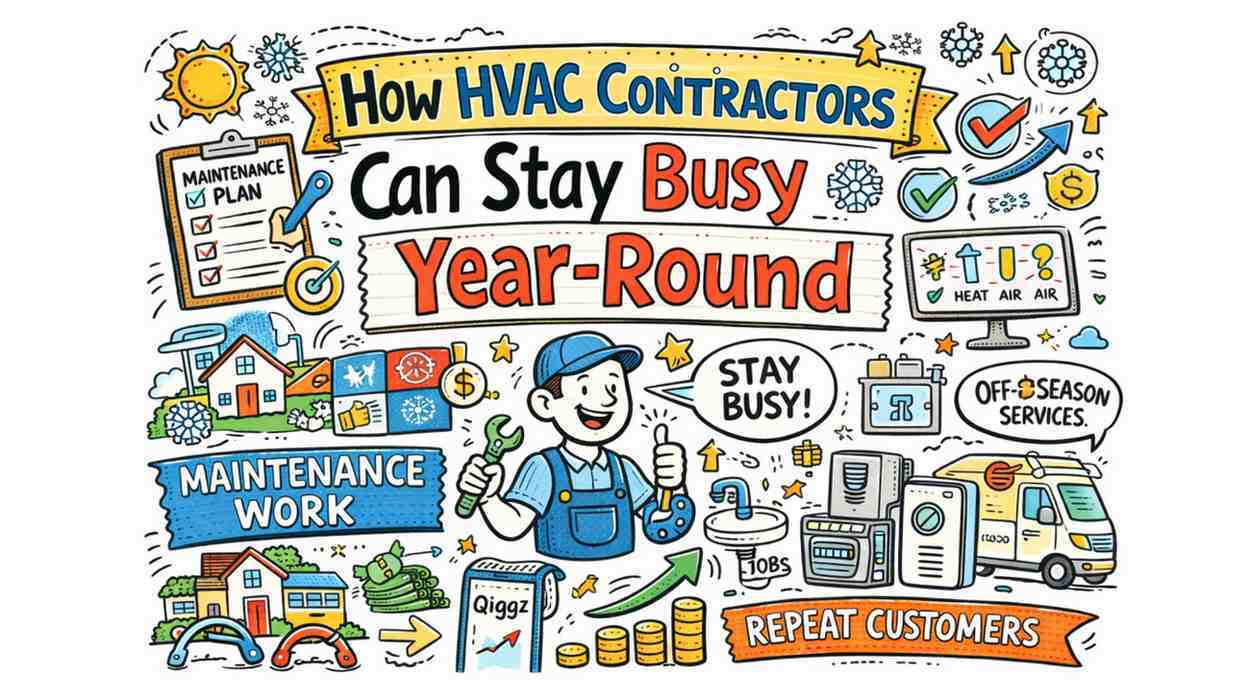
The HVAC companies that stay busy year-round don't rely on weather alone. They build systems that create demand before emergencies happen.
This guide breaks down exactly how US HVAC contractors can stay booked all year, regardless of climate, region, or company size.
1. Understand the Real HVAC Demand Cycle (US-Wide)
HVAC demand in the US follows predictable patterns, but most contractors only react to them instead of planning around them.
Typical demand curve:
- Peak Summer: AC failures, installs, emergency calls
- Peak Winter: Heating issues, furnace repairs, heat pumps
- Shoulder Seasons (Spring/Fall): Maintenance, tune-ups, replacements (if positioned correctly)
The contractors who struggle in shoulder seasons usually:
- Only market emergency services
- Don't push maintenance plans
- Don't educate customers
- Don't diversify services
The contractors who stay busy treat HVAC like a subscription business, not a crisis business.
2. Maintenance Plans Are the Foundation of Year-Round Work
If you take only one thing from this article, take this:
Maintenance contracts are the backbone of stable HVAC businesses.
Why maintenance plans work:
- Predictable revenue
- Scheduled off-season work
- Customer retention
- Higher lifetime value
- Priority access to replacements & upgrades
A homeowner with a maintenance plan:
- Calls you first
- Trusts your recommendations
- Replaces systems sooner
- Doesn't shop on price as aggressively
What strong HVAC maintenance plans include:
- Biannual system checks (spring + fall)
- Priority scheduling
- Discounted repairs
- Simple, affordable monthly or annual pricing
Even 100–200 active plans can stabilize slow months dramatically.
3. Sell Maintenance When Demand Is High (Not When It's Slow)
Most HVAC contractors try to sell maintenance plans during slow seasons, when homeowners aren't thinking about HVAC.
That's backwards.
Best time to sell maintenance:
- During emergency AC calls
- After a successful furnace repair
- At the end of an install job
When a system just failed, customers are:
- Emotionally engaged
- Aware of risk
- Willing to prevent future issues
Phrase it simply:
"Most of our customers add our maintenance plan so this doesn't happen again."
This single habit fills spring and fall calendars automatically.
4. Diversify HVAC Services Beyond Emergency Repairs
Emergency work is lucrative, but it's unpredictable.
Year-round HVAC businesses diversify into services that don't depend on breakdowns.
High-demand HVAC add-ons:
- Seasonal tune-ups
- Indoor air quality (IAQ) solutions
- Smart thermostats
- Duct inspections & sealing
- Filter programs
- System efficiency audits
Many of these services are:
- High margin
- Easy to schedule
- Perfect for shoulder seasons
Homeowners don't know they need these, until you educate them.
5. Educate Customers Before They Need You
The best HVAC contractors don't wait for breakdowns. They stay top-of-mind year-round.
Simple education ideas:
- "Get your AC ready before summer hits"
- "Why your furnace fails in the first cold snap"
- "Signs your HVAC system is costing you money"
Education:
- Builds trust
- Creates proactive service calls
- Positions you as an expert, not a repair tech
Contractors who educate don't rely on weather luck.
6. Build Repeat Customers, Not One-Off Jobs
One-time emergency customers keep you busy for a day. Repeat customers keep you busy for years.
How to turn HVAC jobs into repeat work:
- Explain what you fixed (clearly)
- Mention what might fail next
- Recommend preventative maintenance
- Follow up after the job
- Ask for reviews
The US HVAC market is crowded, but loyalty is rare.
Repeat customers:
- Schedule maintenance
- Refer neighbors
- Replace systems with you
7. Use Smarter Job Sources (Not Lead-Selling Platforms)
Many HVAC contractors rely on:
- Paid lead platforms
- Bidding wars
- Commission-based marketplaces
These platforms:
- Spike work during peak season
- Dry up during slow months
- Push contractors to underprice
That's why more HVAC contractors are shifting to platforms like Qiggz.
Why Qiggz supports year-round HVAC work:
- Homeowners post real jobs directly
- No bidding wars
- No commissions
- Limited vendor exposure per job
- Direct communication
Instead of fighting for visibility, HVAC contractors get matched with work, making demand more predictable even outside peak seasons.
8. Regional Strategy: Adapt to Your Climate, Not Against It
The US HVAC market varies widely by region.
Hot-climate states (TX, FL, AZ, CA):
- Summer AC dominates
- Push pre-summer inspections
- Sell efficiency upgrades & IAQ
Cold-climate states (MN, MI, NY):
- Heating reliability is key
- Fall furnace inspections are critical
- Promote safety & efficiency
Mixed-climate states:
- Balanced AC + heating plans
- Dual-system maintenance contracts
Smart contractors tailor messaging, not services, to local demand.
9. Price for Stability, Not Just Volume
Many HVAC contractors discount heavily during slow seasons just to stay busy.
That often backfires.
Low pricing:
- Attracts price-shoppers
- Increases callbacks
- Reduces margins
- Burns out crews
Instead:
- Bundle services
- Add value (priority scheduling, warranties)
- Target repeat customers
Stability comes from better customers, not cheaper prices.
10. Use Reviews and Visibility to Reduce Seasonality
Homeowners hire HVAC contractors they trust, especially in non-emergency situations.
That trust comes from:
- Reviews
- Professional profiles
- Clear communication
- Consistent branding
Contractors with strong visibility:
- Get proactive calls
- Win maintenance work
- Get scheduled replacements
This is another reason platforms like Qiggz matter, visibility is structured, not pay-to-play.
11. Prepare for Slow Seasons Before They Arrive
Most HVAC contractors try to "fix" slow months during slow months.
That's too late.
Smart preparation includes:
- Selling maintenance in peak season
- Booking tune-ups in advance
- Building email/text follow-ups
- Staying visible on hiring platforms
Consistency is built ahead of time, not in panic mode.
12. Train Teams for Shoulder-Season Services
Idle crews cost money.
Use slower months to:
- Cross-train technicians
- Improve customer communication
- Expand service offerings
- Optimize processes
The strongest HVAC businesses use downtime to upgrade, not wait.
13. The HVAC Contractors Who Win Think Long-Term
The most successful HVAC contractors in the US don't chase weather.
They build:
- Predictable revenue streams
- Loyal customer bases
- Fair pricing models
- Multiple job channels
They're busy in July and October.
The Bottom Line
HVAC seasonality is unavoidable.
But HVAC income instability is not.
Contractors who stay busy year-round:
- Build maintenance programs
- Educate customers
- Diversify services
- Use better job platforms
- Focus on repeat business
If your goal is steady work, stable income, and fewer slow months, the solution isn't working harder, it's working smarter.
Want HVAC jobs without bidding wars or commissions, year-round?
Join Qiggz and connect directly with homeowners across the US.
Frequently asked questions
Why does HVAC work dry up in spring and fall?
Demand spikes when the weather is extreme, so summer and winter bring emergency calls while spring and fall leave a revenue gap. Seasonality itself is real and cannot be removed, but the income swing can be. Contractors who only market emergency service ride the boom and bust cycle; those who sell maintenance smooth it out.
What is the most reliable way for an HVAC contractor to create predictable revenue?
Maintenance plans are the backbone of a stable HVAC business. They turn crisis driven work into something closer to a subscription, giving you booked revenue during slow months. A strong plan includes biannual checks, priority scheduling, and discounted repairs at a price customers accept easily. Plan holders also call you first and replace systems sooner.
When is the best moment to sell a maintenance plan to a customer?
Sell during peak season, not during the slow months when you need the work. The best moments are right after an AC failure, a furnace repair, or a new installation, when the customer has just felt the cost of a breakdown and is most motivated to prevent the next one. Waiting until spring is too late.
What services can HVAC contractors add beyond emergency repairs?
Useful additions include seasonal tune-ups, indoor air quality solutions, smart thermostat installs, duct inspections, filter programs, and efficiency audits. Each one gives customers a reason to call you outside of a breakdown. Combined with customer education, such as reminding people to get the AC ready before summer hits, they generate proactive calls in the quiet months.
Should I lower my prices during the slow season to stay busy?
No. Discounting in slow months attracts price shoppers, increases callbacks, and reduces your margins without building anything lasting. Bundle services and focus on repeat customers instead. The contractors who stay busy year round build predictable revenue, a loyal customer base, fair pricing, and several job channels rather than chasing the weather.