Introduction: The Weight No One Warned You About
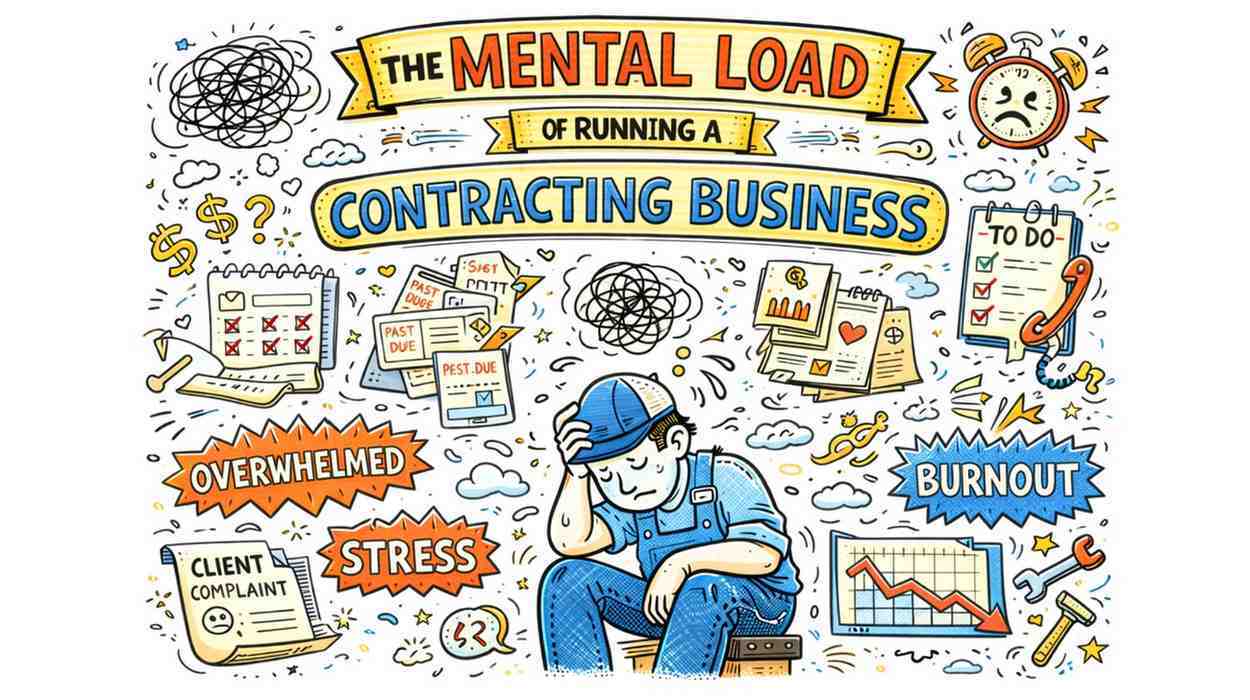
Most contractors are prepared for physical work. Long days. Early mornings. Tools, ladders, crawl spaces, job sites. What almost no one prepares you for is the mental load. That constant background pressure:
- Thinking about the next job
- Worrying about slow weeks
- Replaying conversations with clients
- Stressing over pricing decisions
- Feeling guilty when you rest
You might be doing well on paper, yet still feel exhausted. That's because running a contracting business doesn't just demand your hands. It demands your mind, all the time. And for many contractors, that invisible load becomes heavier than the physical work itself.
1. What "Mental Load" Really Means for Contractors
Mental load isn't just stress. It's the ongoing responsibility of holding everything together, even when nothing is actively happening. For contractors, mental load shows up as:
- Constant decision-making
- Anticipating problems before they happen
- Remembering dozens of details
- Being "on" even when off the clock
Unlike employees, contractors don't get to clock out mentally. You're always thinking:
- "Do I have enough work next week?"
- "Did I price that job right?"
- "What if the customer calls back unhappy?"
- "What if something breaks?"
That constant vigilance is exhausting, and it's rarely acknowledged.
2. You're Carrying Multiple Roles at Once
Most contractors aren't just tradespeople. You're also:
- Sales
- Customer service
- Operations
- Scheduling
- Accounting
- Marketing
- Quality control
And often, you're all of that alone. Every role adds cognitive load:
- Sales means persuasion and follow-up
- Scheduling means juggling time and expectations
- Admin means paperwork and compliance
- Marketing means staying visible
Switching between these roles all day creates mental fatigue, even if the work itself isn't physically hard.
3. The Pressure of Never Feeling "Done"
One of the hardest parts of running a contracting business is that the work never feels finished. Even when today's job is complete:
- Tomorrow's schedule isn't guaranteed
- Next month's income is uncertain
- One bad review can undo weeks of good work
There's always something unresolved:
- A quote waiting for approval
- An invoice not yet paid
- A customer who might call back
- A platform algorithm you can't control
That lack of closure keeps your brain in a constant low-grade alert state.
4. Decision Fatigue Is Real (and Draining)
Contractors make hundreds of small decisions every week.
- Do I take this job or pass?
- Do I charge more or stay competitive?
- Do I respond now or later?
- Do I squeeze this job in or protect my time?
None of these decisions are dramatic, but together, they drain you. By the end of the day:
- Your patience is thinner
- Your tolerance for problems is lower
- Your energy for family or rest is gone
This isn't weakness. It's decision fatigue, and it's a major contributor to burnout.
5. Financial Uncertainty Is a Constant Background Noise
Even successful contractors feel this. Because income often depends on:
- Weather
- Seasonality
- Customer decisions
- Platform visibility
- Referrals that may or may not come
There's always a mental calculation running:
- "Am I charging enough?"
- "What if work slows down?"
- "Can I afford to say no?"
That uncertainty creates anxiety, not because you're bad with money, but because your business income isn't predictable by default.
6. Emotional Labor With Clients Is Underrated
Contractors don't just fix problems, they manage emotions. You deal with:
- Stressed homeowners
- Frustrated customers
- Unrealistic expectations
- Price objections
- Communication misunderstandings
Staying calm, professional, and patient, especially when you're tired, takes emotional energy. Over time, this adds up. Especially for contractors who:
- Care about doing a good job
- Take complaints personally
- Want customers to be happy
That emotional labor is real work, even if it doesn't show on an invoice.
7. The Guilt of Resting
Many contractors feel guilty when they're not working. If you're resting, your mind says:
- "I should be answering messages."
- "I should be looking for more work."
- "What if something comes in?"
This makes true rest almost impossible. You're physically off, but mentally still working. That constant guilt accelerates burnout because recovery never fully happens.
8. Why Being "Busy" Doesn't Reduce Mental Load
Ironically, being busy often increases mental load. Why?
- More jobs = more coordination
- More clients = more communication
- More work = more responsibility
Without systems, more work doesn't create relief, it creates chaos. That's why many contractors say: "I'm booked solid, but I feel worse than when I was slower." The problem isn't volume. It's how much mental energy each job consumes.
9. Platforms and Systems Can Make Mental Load Worse
Where you get work from matters. Many contractors rely on:
- Bidding platforms
- Paid leads
- Unlimited competition marketplaces
These systems increase mental load by:
- Forcing constant monitoring
- Creating pricing anxiety
- Encouraging comparison
- Rewarding speed over quality
You're not just doing work, you're fighting for visibility. That's why more contractors are actively looking for calmer, fairer alternatives like Qiggz. Why this matters mentally:
- No bidding wars
- No chasing leads
- Direct homeowner communication
- Clear job visibility
Reducing chaos reduces cognitive load, and that matters as much as income.
10. The Hidden Cost: Burnout Without Warning Signs
Contractor burnout rarely looks dramatic at first. It starts quietly:
- Irritability
- Loss of motivation
- Short temper
- Difficulty focusing
- Dreading calls
Because contractors are used to pushing through, these signs are often ignored. Until one day:
- You snap
- You shut down
- You consider quitting the trade entirely
Burnout isn't sudden, it's cumulative.
11. Why This Isn't a Personal Failure
Many contractors blame themselves. They think:
- "I should be tougher."
- "Others handle this fine."
- "This is just part of the job."
That's not true. The mental load you're carrying is structural:
- Unpredictable income
- Poor systems
- High responsibility
- Little external support
Fixing the structure reduces the load, not "toughing it out."
12. How Contractors Can Reduce Mental Load (Practically)
This isn't about "self-care platitudes." It's about business design. Ways contractors reduce mental load:
- Clear pricing floors
- Defined work hours
- Better job sources
- Repeat customers
- Fewer but better jobs
- Systems for quotes and follow-ups
The goal isn't zero stress, it's manageable stress.
13. Stability Is the Best Stress Reducer
Predictability lowers mental strain. Contractors with:
- Maintenance plans
- Repeat customers
- Consistent job flow
Think less about survival, and more about doing good work. Stability gives your mind space to rest.
14. Mental Load Shrinks When You Regain Control
The biggest mental shift happens when contractors:
- Stop racing to the bottom
- Stop chasing every job
- Stop reacting to algorithms
Control creates calm. That's why sustainable contractors focus on:
- Pricing power
- Job quality
- Fair platforms
- Long-term relationships
Not just staying busy.
The Bottom Line
The mental load of running a contracting business is real, and heavy. It comes from:
- Constant responsibility
- Uncertainty
- Emotional labor
- Decision fatigue
- Lack of systems
If you feel exhausted even when work is good, you're not broken. Your business structure is asking too much of your mind. Reducing mental load starts with reducing chaos. That means better pricing, better systems, and better job sources, like Qiggz, where contractors connect directly with homeowners without bidding wars, commissions, or constant stress.
Frequently asked questions
What does mental load mean for someone running a contracting business?
Mental load is the invisible work of running the business: constant decision-making, anticipating problems before they happen, remembering dozens of details, and being on even when you are off the clock. It is separate from the physical work of the trade, and it is the part nobody warns you about when you go out on your own.
Why do I feel like work is never finished even after a full day?
Because a contractor carries several roles at once and nothing closes cleanly. You are handling sales, customer service, operations, scheduling, accounting, marketing, and quality control in the same week. Quotes sit awaiting approval, invoices go unpaid, and callbacks may or may not come, so there is always something unresolved carrying into tomorrow.
What are the warning signs of contractor burnout?
Watch for irritability, loss of motivation, a shorter temper than usual, difficulty focusing, and dread at the thought of answering a call. Burnout in this trade tends to arrive without obvious warning, because the workload feels normal right up until it does not. Guilt about resting is often an early signal too.
How can I practically reduce the mental load of my business?
Reduce the number of open decisions rather than trying to think faster. Set clear pricing floors and defined work hours. Find better job sources and build repeat customers. Take fewer but better jobs, and put simple systems in place for quotes and follow-ups. Stability is the strongest stress reducer, because predictable work removes the constant background uncertainty.
Does being busier actually reduce the mental load?
No. Being busy does not reduce mental load, and often adds to it, because more volume means more decisions, more emotional labor with clients, and more details to hold. The burden comes from how the business is structured, not from a lack of effort or personal weakness. Regaining control over pricing and job quality is what shrinks it.